






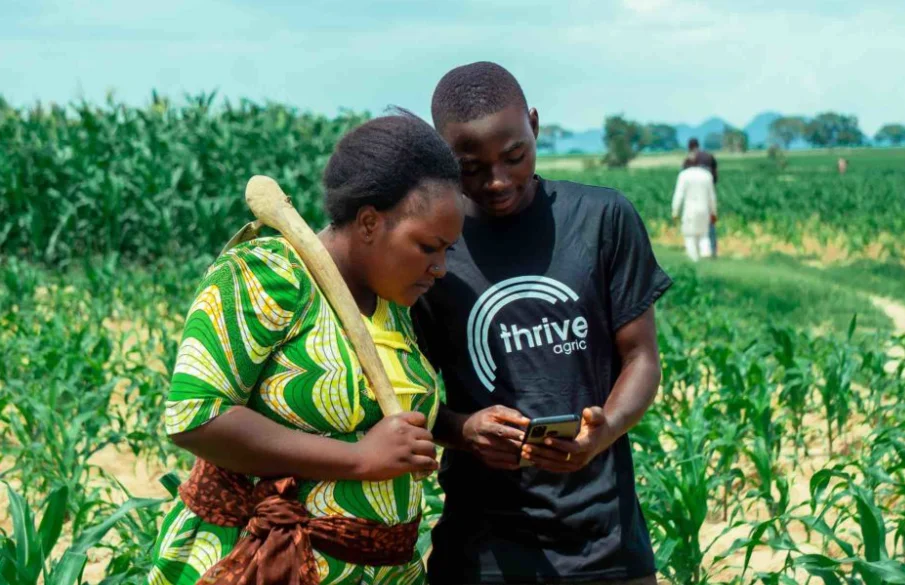
Nigeria’s agriculture sector has long relied on the hard work of smallholder farmers, millions who feed the nation and contribute nearly 24% of GDP. Yet, the systems enabling their activities have barely evolved. Cash transactions dominate, payments are often delayed, and accurate financial records remain rare.
But a quiet transformation is emerging.
From grain fields in Kebbi to cassava farms in Oyo, farmers are beginning to interact with digital financial tools designed for rural use. These solutions promise quicker transactions, easier access to credit, and better visibility across the value chain. Progress is slow—but it’s happening.
Digital Adoption Is Growing, but Gradually
A study by 60 Decibels, covering 1,374 farmers during the 2023 and 2024 seasons, highlights a digital shift that is still in its early stages.
Key findings include:
- Only 35% knew about digital agriculture tools
- 40% had used at least one digital service
- Just 5% used digital tools for critical financial tasks like receiving payments
Digital credit awareness stood at 20%, and knowledge of digital insurance was even lower.
Farmers attribute the low adoption to:
- Poor rural network coverage
- Costly smartphones and data bundles
- Confusing digital systems
- A cultural preference for familiar cash transactions
Interestingly, 64% of those using digital tools relied on simple voice calls, not apps or USSD, illustrating both limited digital literacy and the need for low-tech solutions.
Why Digital Payments Are Becoming Essential
Even with limited use, digital payments are already shifting how agricultural finance works.
Every digital transaction creates a record, payment confirmations, input purchase logs, sales history, providing valuable financial data that farmers never had before.
For lenders, these digital footprints act as a substitute for collateral, helping them assess risk in a sector where formal assets are hard to document.
This shift opens doors to credit opportunities previously inaccessible to rural farmers.
Fintech Innovations Filling the Gaps
Several Nigerian agritech startups are building systems tailored to rural realities.
Crop2Cash: Enabling Rural Digital Payments
Crop2Cash, one of the leading agritech players, says it has worked with more than 500,000 farmers across 13 states.
Its CashCard provides farmers with a simple way to:
- Receive payments digitally
- Store funds securely
- Build transaction histories
GSMA (2025) reports that over 80,000 farmers use its USSD platform for input financing, advisory services and weather updates. The platform has also facilitated $2.8 million in credit to smallholders.
ThriveAgric: Scaling Agriculture Through Data
ThriveAgric’s 2023 impact report shows the company:
- Disbursed $40 million in loans
- Supported 273,000+ farmers
- Delivered 2.3 million metric tonnes of grain
Its digital processes, payment automation, farm records and structured offtaker agreements, make this scale possible.
AgroMall: A Pioneer in Digital Agriculture
AgroMall, one of the earliest to scale nationwide, has onboarded over 530,000 farmers. Its digital marketplace and mobile platforms help farmers access:
- Price information
- Input distribution
- Market linkages
These tools bring more structure to historically informal agricultural transactions.
A Sector Still Held Back by Digital Barriers
Despite ongoing progress, many obstacles persist.
The same study revealed that although 65% of farmers sell their goods, only:
- 4% use digital tools to find buyers
- 4% negotiate prices digitally
Most still rely on physical markets or middlemen who dictate terms.
Farmers frequently cite:
- Poor network reliability
- Transaction and platform fees
- Distrust of digital dispute systems
- Fear of being exploited through unfamiliar technology
Women face even larger barriers. GSMA notes that 60% of rural women lack mobile internet access, excluding many from digital agriculture entirely.
Looking Ahead: Digital Finance as a Catalyst for Growth
Nigeria’s agricultural sector grew 1.76% in Q4 2024 and contributed 25.59% to GDP, according to NBS data—proof of its economic importance.
Fintech cannot solve all agricultural problems, but it is already:
- Improving credit access
- Speeding up payments
- Increasing value chain transparency
- Supporting structured trading
- Encouraging savings habits
- Reducing reliance on middlemen
The future of Nigerian agriculture, more efficient, profitable and transparent, will be built on a blend of traditional farming and digital financial systems that empower rural communities.
The transformation may be gradual, but the momentum is unmistakable.