
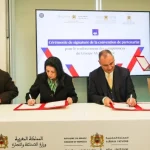



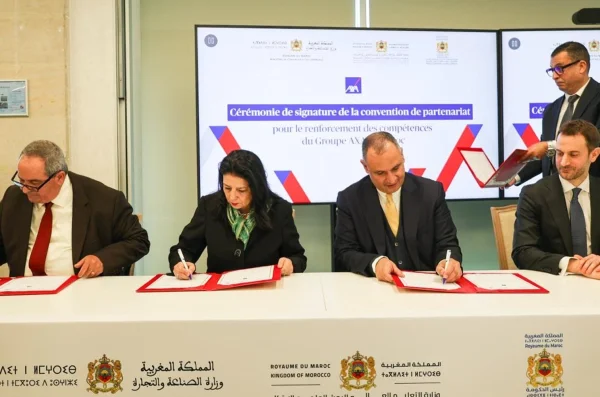
Rabat, Morocco – February 16, 2026 – Morocco has signed a landmark partnership with French insurance giant AXA to strengthen national expertise in data, artificial intelligence (AI), and digital technologies, aligning with the country’s ambitious 2030 digital strategy.
The agreement, signed by the Ministry of Industry and Trade, the Ministry of Higher Education, Scientific Research and Innovation, and the Ministry of Digital Transition and Administrative Reform, seeks to train 100,000 young Moroccans annually and create 240,000 tech jobs by 2030.
Bridging Academia and Industry
Under the partnership, universities and public higher education institutions will work closely with schools overseen by the Ministry of Industry and Trade to align training programs with labor market needs. Initiatives will include initial and continuing education, work-study tracks, and R&D projects tied to Morocco’s digital transformation.
The program also focuses on high-demand tech areas such as cybersecurity, cloud computing, DevOps, and software testing, ensuring that graduates are ready for emerging opportunities in the tech sector. Professional internships, immersion schemes, and graduate integration programs will further strengthen pathways from classroom to career.
Strengthening Morocco’s Digital Ecosystem
The agreement is part of a broader push to develop Morocco’s human capital and position the country as a regional hub for technology professions. By anticipating technological shifts and equipping young professionals with digital skills, the initiative aims to reinforce Morocco’s economic competitiveness and digital sovereignty.
Morocco has also recently partnered with tech leaders such as Samsung and Mistral AI to expand digital skills development, signaling a growing commitment to creating a vibrant, technology-driven workforce.
Looking Ahead
The Ministry of Digital Transition emphasized that this collaboration will help structure a national ecosystem capable of meeting future digital demands, while supporting innovation and enhancing the country’s global tech competitiveness.
By 2030, Morocco aims not only to train hundreds of thousands of young professionals in digital skills but also to generate a robust pipeline of specialized talent ready to power the country’s growing tech economy.