
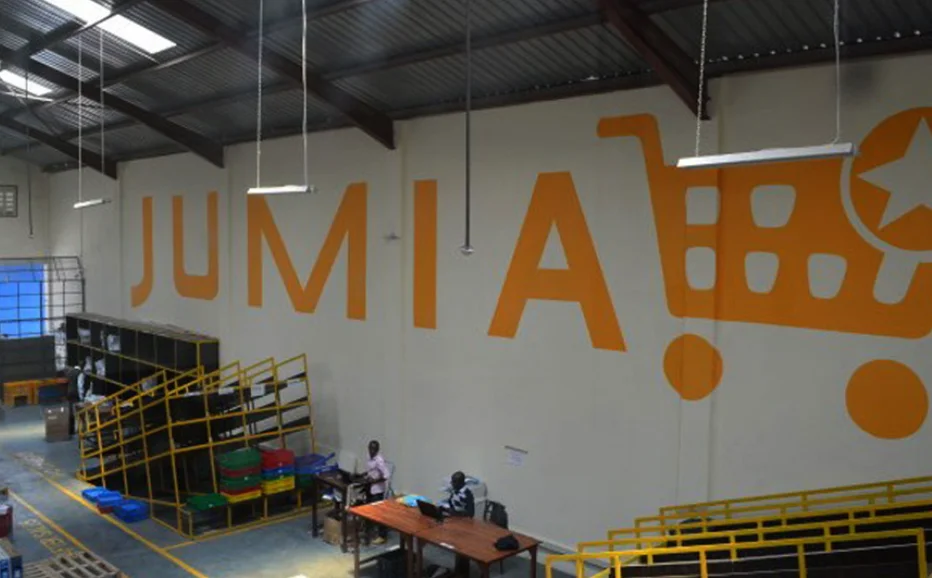
Nigeria has emerged as the cornerstone of Jumia’s ongoing recovery, with the e-commerce giant reporting a 30% year-on-year increase in physical goods orders and a 43% rise in Gross Merchandise Value (GMV) in the country.
The performance update highlights Jumia’s resilience in the wake of the macroeconomic and currency challenges that shook Nigeria in 2024, underscoring the company’s ability to adapt to local realities while global competitors pull back.
Localized Strategy Gives Jumia an Edge
Jumia attributes its strong performance to a localized business model and infrastructure, allowing it to thrive where global entrants are retreating.
“We continue to see a pullback from certain global entrants in some markets like Nigeria, while we steadily gain local market share,” the company said. “Our localized operating model, built on strong vendor relationships, cost-effective logistics, and deep market understanding, has become a critical competitive edge.”
Executives noted that several global platforms have reduced marketing investment and raised prices, signaling the challenges of operating at scale in Nigeria. Jumia, in contrast, tailors operations to local customer needs, emphasizing on-the-ground customer service as a key differentiator in a market where trust in e-commerce remains fragile.
Robust Logistics Network Fuels Growth
Jumia highlighted its extensive logistics network as another competitive advantage. The company claims to operate the most robust distribution system in Nigeria, allowing it to deliver faster and more reliably than rivals reliant on smaller third-party logistics providers.
This network enables Jumia to reach more cities and customers efficiently, ensuring that it can scale operations while keeping costs manageable, a challenge that has hindered many international competitors.
Expansion Across Nigeria Accelerates
Over the past 18 months, Jumia has aggressively expanded its footprint across Nigeria. Hundreds of new cities, particularly in the east, west, and northern regions, have been added to the company’s delivery routes. Notably, Jumia recently launched operations in previously underserved northern cities like Sokoto and Maiduguri, unlocking large untapped customer bases.
While Côte d’Ivoire remains the country with the densest Jumia network due to its early launch in 2016, Nigeria is rapidly catching up. The company’s expansion push in Nigeria began in mid-2023, signaling significant room for growth.
“We have big plans to further expand in countries like Nigeria, especially into the north,” Jumia said, highlighting partnerships with local vendors and delivery providers as key to executing its strategy.
Vendor Strategy Strengthens Competitive Advantage
Jumia also credits its vendor strategy for its success. By sourcing most of its competitive product assortment from Chinese suppliers, the company can offer both price competitiveness and product variety, outmatching global rivals in key segments.
This combination of localized operations, robust logistics, and strategic vendor partnerships positions Jumia as a leading e-commerce player in Nigeria, even as global competitors scale back or withdraw from the market.
Looking Ahead
With Nigeria at the center of its recovery, Jumia is poised to further expand its market share while continuing to leverage its deep local knowledge, delivery infrastructure, and vendor ecosystem.
As global e-commerce giants retreat from challenging markets, Jumia’s adaptation to local realities appears to be paying off, setting the stage for continued growth in 2025 and beyond.