





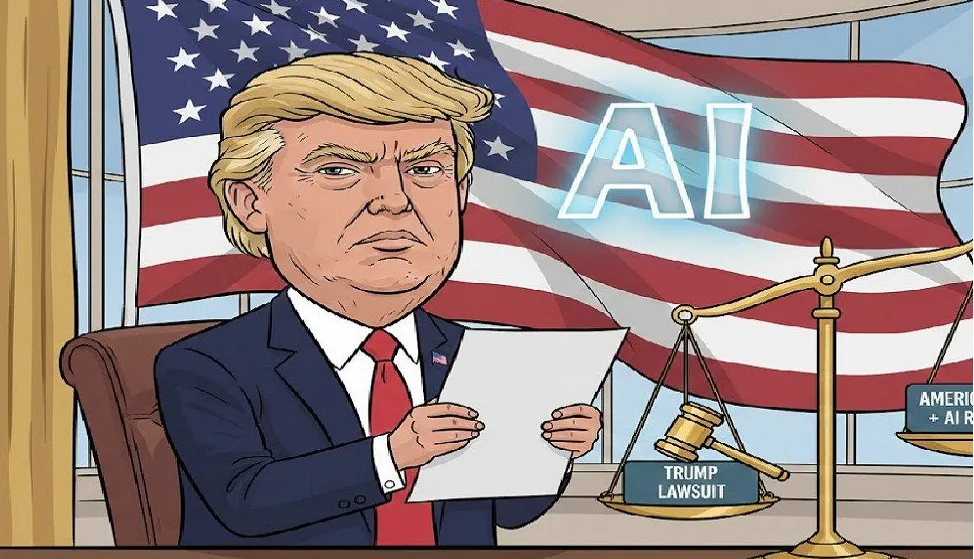
The Donald Trump administration is reportedly drafting an executive order that would authorize the U.S. Justice Department to sue states moving ahead with their own artificial intelligence (AI) regulations. According to reporting from The Washington Post, the plan signals the White House’s intent to take firm control of how AI is governed nationwide.
This push comes after congressional Republicans failed to pass legislation preventing states from regulating AI independently. In the absence of federal rules, states have begun rolling out their own policies covering schools, workplaces, public services, and digital platforms. The White House now wants to halt that momentum and impose one federal approach instead of a growing patchwork of local laws.
Why the White House Wants to Block State AI Laws
Under the proposed order, the Justice Department would be given the authority to challenge state AI legislation in federal court. The Trump administration argues that fragmented rules across multiple states could slow technological progress and create compliance headaches for AI companies operating nationwide.
But advocates of state-level action say local governments cannot wait. With AI now influencing education, hiring, healthcare, and online safety, they argue states are filling a regulatory void left by Washington’s delay in creating comprehensive national standards.
A Growing Clash Between Federal and State Power
At its core, the dispute highlights long-running tensions over who gets to shape U.S. tech policy. While states are crafting rules to address AI’s risks today, federal lawmakers have yet to agree on a broader framework. This has resulted in a mosaic of state laws, something the Trump administration sees as inefficient and disruptive.
If the order moves forward, it would represent a major attempt by the federal government to reclaim authority. It also signals rising frustration within the White House at the increasing number of state-driven AI policies.
Legal Uncertainty Could Spark Major Court Battles
Experts warn that directing the Justice Department to sue states over AI rules could face significant constitutional challenges. The president’s power to override state regulatory authority in this way is not well established, which means the issue could escalate into disputes over federal vs. state powers, and potentially land before the U.S. Supreme Court.
The draft order is still under internal consideration, and the final language may change. But if enacted, states may be forced to reconsider or rewrite their AI rules, or defend them in court against Washington.
What AI Companies and Citizens Stand to Gain or Lose
For AI developers and startups, a single federal regulatory standard could simplify compliance across the country. Instead of managing dozens of state-specific rules, companies would follow one national framework.
For states, however, it would mean losing influence over how emerging AI technologies affect local communities, from student safety to workplace oversight.
More broadly, the conflict underscores the real challenge facing U.S. policymakers: AI innovation is moving faster than U.S. laws can adapt. Whether federal or state leaders ultimately shape the rules will determine the pace, safety, and fairness of America’s AI future.