





The U.S. Department of State has approved $150 million in funding to help Zipline scale its autonomous drone delivery network throughout Africa. The investment operates on a pay-for-performance model, requiring African governments to sign expansion contracts and commit to covering operational expenses, an approach designed to guarantee long-term sustainability of the service in national healthcare systems.
Expanding Drone Delivery to Millions Across Africa
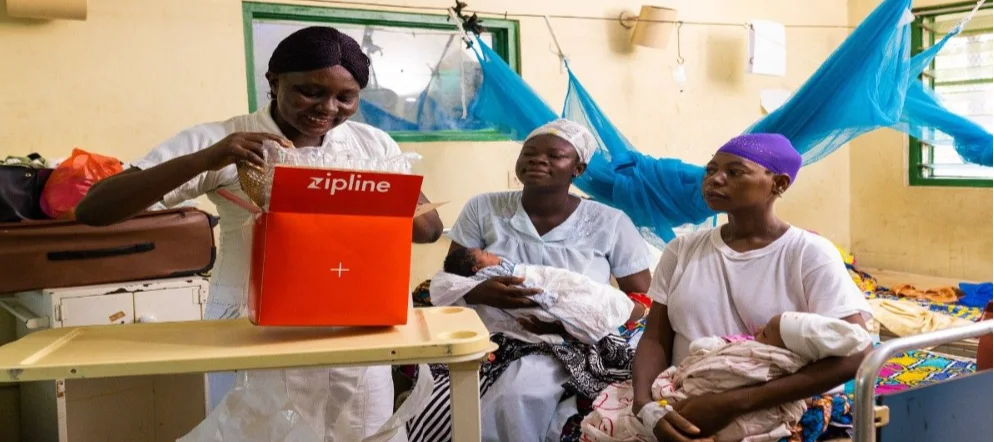
Zipline, the world’s leading autonomous logistics company, has been operating in Africa since 2016, delivering blood, vaccines, and essential medical supplies to more than 5,000 hospitals and clinics. With this new funding, Zipline aims to expand its network to:
- Reach over 130 million people
- Serve 15,000 health facilities—tripling its current coverage
This marks one of the most extensive healthcare logistics expansions ever undertaken on the continent.
Driving Job Creation and Economic Growth
The initiative is expected to generate more than 800 skilled jobs across sectors such as:
- Robotics
- Healthcare logistics
- Artificial intelligence (AI)
- Engineering and operations
Zipline estimates that once fully implemented, the expansion could unlock up to $1 billion in economic benefits per year by reducing logistical barriers and strengthening regional supply chains.
Rwanda Becomes the First to Benefit
Rwanda will be the first country to tap into the new U.S.-funded expansion. Key plans include:
- Building a third distribution center
- Doubling daily delivery capacity across the country
- Deploying short-range precision drones for dense urban areas
- Establishing a central testing hub for Zipline’s hardware and software systems
Rwanda continues to be a global model for the use of drones in public health delivery.
Growth Plans for Nigeria, Kenya, and Côte d’Ivoire
Nigeria
Zipline currently supports healthcare delivery in three Nigerian states, improving treatment outcomes and reducing stockouts. The new funding will allow the company to expand into additional regions.
Kenya
In Kenya, Zipline plans to extend operations into the western counties and integrate its drone delivery network into the national healthcare system, enabling more efficient last-mile distribution.
Côte d’Ivoire
Zipline will increase coverage across Ivorian communities, supporting local clinics and strengthening the nationwide supply chain for critical medical goods.
Major Improvements in Health Outcomes
Zipline’s work across Africa has already delivered measurable health benefits:
- Up to 56% reduction in maternal mortality in Rwanda and Ghana
- Over 40% drop in missed first-dose vaccinations
- Fewer missed opportunities for malaria treatment
- More than 1.7 million deliveries completed safely
- Over 120 million miles flown with zero accidents
These results highlight how autonomous logistics can directly improve public health systems.
Environmental and Community Impact
Zipline’s electric drones have significantly reduced dependence on fuel-based transportation. The company has:
- Saved over 900,000 gallons of fuel
- Cut 97% of CO₂ emissions
- Improved access to lifesaving products in remote communities
- Supported local employment and skill development
A Results-Driven Partnership for Better Healthcare
U.S. and African leaders emphasize that the outcomes-based funding model encourages governments to responsibly invest in long-term infrastructure while expanding access to critical health services. This collaboration showcases how innovation, technology, and sustainability can work together to address Africa’s public health challenges.