




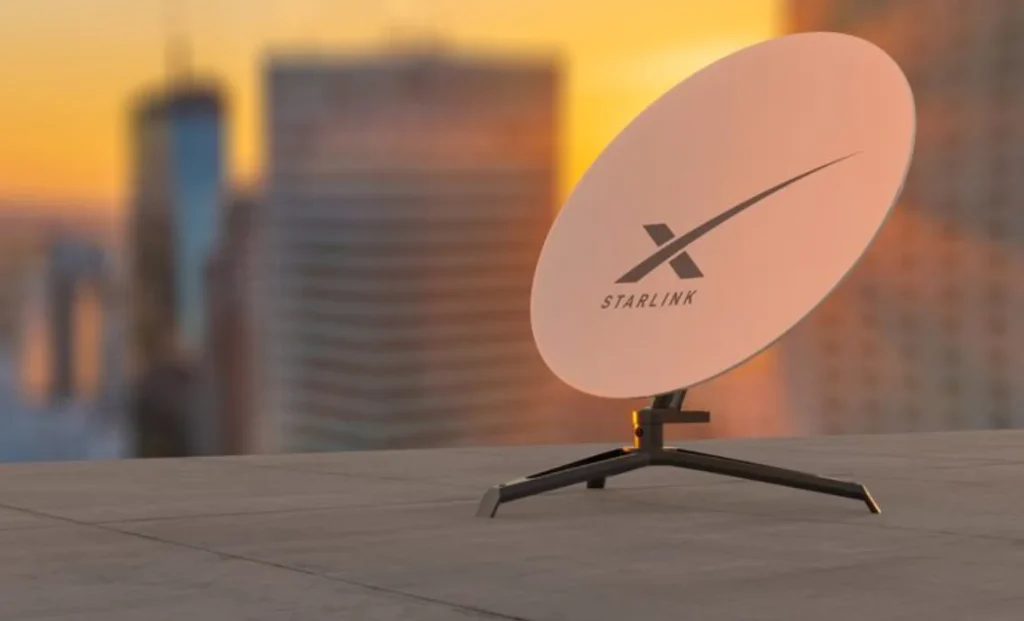
More than three months after Starlink halted new orders in major Nigerian cities, the satellite broadband service is still unavailable across Lagos and Abuja, highlighting persistent capacity challenges.
In late September, the Elon Musk-owned satellite internet provider stopped accepting new subscriptions in some of Nigeria’s busiest urban locations after reaching full network capacity.
At the time, affected areas included Lekki, Victoria Island, Ikoyi, Ikeja, Surulere, and parts of Abuja.
Starlink Now Displays “Sold Out” Across Lagos and Abuja
Fresh checks conducted on January 12, 2025, show that the restriction has since expanded across all of Lagos and Abuja, with Starlink’s website now displaying a “Sold Out” notice for prospective users in these locations.
The message states: We are currently at capacity and unable to provide service in this area. Please check back in at a later time.”
Prospective customers are now being directed to a waitlist, where they are required to pay a deposit to reserve a spot and receive notifications once new capacity becomes available.
“Starlink service is currently at capacity in your area. However, the good news is you can still place a deposit now to reserve your spot on the waitlist and receive a notification as soon as service becomes available again,” the company notes on its platform.
Existing Customers Also Affected by Capacity Limits
While new subscriptions remain blocked, some customers who purchased Starlink kits weeks before the suspension say they are unable to activate their devices due to ongoing capacity constraints.
One frustrated user wrote on social media:
“For those of us that have bought Starlink for close to two months now and can’t activate due to ‘No Capacity’, what’s our hope?”
Affected customers have been advised to periodically check their accounts for updates, with activation expected only after Starlink upgrades its capacity in congested areas.
Not the First Capacity Crisis for Starlink in Nigeria
This is not the first time Starlink has faced operational challenges in Nigeria. In November 2024, the company suspended sales and activations nationwide following bandwidth shortages and unresolved tariff adjustment disputes with the Nigerian Communications Commission (NCC).
Nationwide sales only resumed in July 2025, before entering another restriction phase just two months later.
For Starlink, such restrictions are designed to preserve service quality for existing users when a location reaches optimal network capacity. Once capacity is maxed out, new customer onboarding becomes technically impossible.
Rising Prices and Regulatory Scrutiny
Starlink’s ongoing capacity issues come amid significant price increases in Nigeria. Since launching in 2022, subscription fees have risen by nearly 100%, moving from about ₦38,000 per month to ₦57,000 in 2025, largely due to inflation and the depreciation of the naira against the dollar.
Hardware prices have also increased: Standard Kit: ₦440,000 → ₦590,000
Mini Kit: Now sells for ₦318,000
Following these increases, the NCC sanctioned Starlink in October 2024, citing breaches of Sections 108 and 111 of the Nigerian Communications Act 2003, which require telecom operators to obtain regulatory approval before adjusting tariffs.
The dispute forced Starlink to temporarily roll back prices to ₦38,000, before settling at ₦57,000 after a broader 50% telecoms tariff hike.
High Demand Driving Network Congestion
Despite the challenges, Starlink’s struggles point to soaring demand in Africa’s most populous country, where users continue to face unreliable broadband services.
With its low Earth orbit (LEO) satellite network, Starlink delivers average download speeds of about 49.6 Mbps in Nigeria, though this is slower than in some other African countries due to high user density and congestion.
Industry data shows Starlink had 66,523 subscribers in Nigeria as of Q2 2025, ranking second only to Spectranet among the country’s internet service providers.
No Timeline Yet for Service Restoration
Starlink has not provided a clear timeline for when new sales and activations will resume in affected areas.
“Please note that we cannot provide an estimated timeframe for service availability, but our teams are working as quickly as possible to add more capacity to the constellation so we can continue to expand coverage for more customers around the world,” the company said.
Until then, prospective and affected customers in Lagos and Abuja remain on hold, waiting for network upgrades to ease congestion and restore access.