






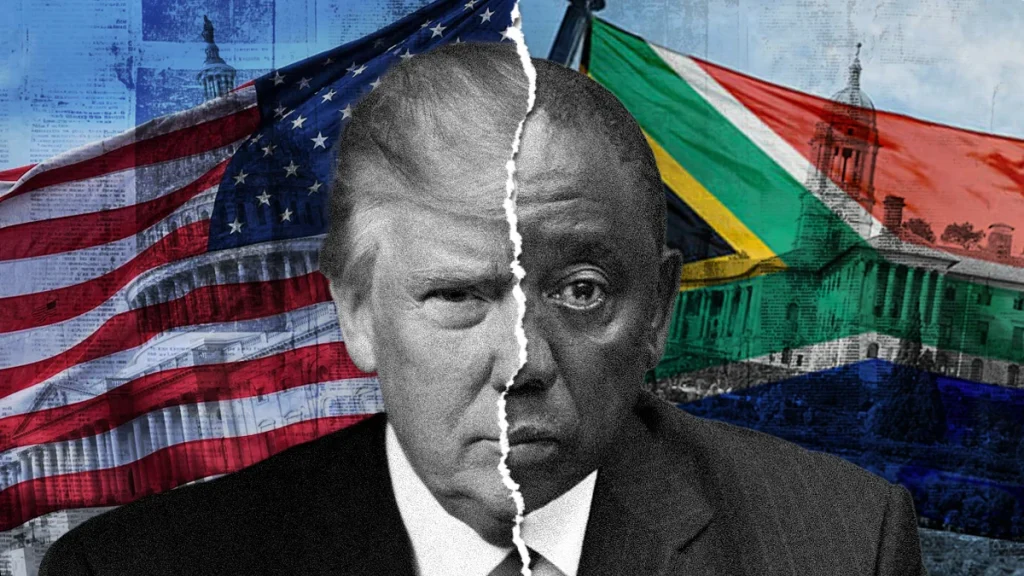
South Africa Caught in Global Digital Trade Battle as US Pushes Permanent E-Commerce Tax Ban
South Africa is at the centre of a growing global trade dispute as the United States intensifies efforts to make a long-standing ban on digital trade tariffs permanent ahead of a కీల meeting of the World Trade Organisation (WTO).
The debate focuses on the WTO’s “moratorium on customs duties on electronic transmissions,” a policy first introduced in 1998 that prevents countries from imposing tariffs on digital transactions such as online purchases, streaming services, data transfers, and video calls.
US Push for Permanent Ban
Washington is now pushing to make the moratorium permanent at the WTO’s 14th Ministerial Conference (MC14), scheduled for March 26–29 in Yaoundé, Cameroon.
Joseph Barloon, the US ambassador to the WTO under Donald Trump, said a permanent ban would provide stability for businesses and strengthen global digital trade.
“Businesses need that stability… moving from one extension to another does not send the right signal,” Barloon stated, noting that the US proposal has backing from over 20 countries, including Japan, South Korea, Mexico, Argentina, and Singapore.
South Africa, India Raise Concerns
However, countries such as South Africa, India, and Brazil have long resisted making the ban permanent, arguing that it limits their ability to regulate digital economies and protect national interests.
For these nations, the stakes are significant. As digital services replace physical goods, governments risk losing valuable customs revenue. There are also growing concerns about data sovereignty, cybersecurity, and the dominance of US-based tech giants.
Big Tech and Trillions at Stake
The outcome of the debate could have major implications for global technology companies, including Amazon, Google, and Spotify.
According to WTO estimates, digitally delivered services reached $4.8 trillion in 2024, nearly double their 2017 levels, with companies from North America and Europe accounting for about 70% of global exports.
A permanent moratorium would effectively shield these companies from new tariffs in emerging markets, while a lapse could open the door for countries to begin taxing cross-border digital services.
Rising Trade Tensions Complicate Talks
The negotiations come amid heightened global trade tensions, with the US imposing tariffs on several major trading partners and threatening further action through trade investigations.
International Chamber of Commerce Deputy Secretary-General Andrew Wilson noted a shift in global sentiment, suggesting that a permanent deal may be difficult to achieve.
Instead, countries may settle for a compromise—possibly extending the moratorium beyond the usual two-year period to four years.
What Happens If Talks Fail?
If no agreement is reached in Yaoundé, the moratorium could expire at the end of March, theoretically allowing countries to impose tariffs on digital services.
However, experts say such a move is unlikely in the short term due to the technical difficulty of tracking cross-border digital transactions and the risk of retaliation—particularly from the United States.
Failure to extend the moratorium would also represent a setback for WTO Director-General Ngozi Okonjo-Iweala, who has been pushing for reforms to keep the organisation relevant in the digital age.
India Holds the Key
Much of the outcome may depend on India’s position. The country played a pivotal role in previous negotiations and is currently engaged in digital trade discussions with the United States.
Analysts believe that while a permanent ban remains unlikely, a temporary extension is still the most probable outcome.
As global digital trade continues to expand rapidly, the decision at MC14 could shape how countries tax—and control—the flow of data and digital services for years to come.