






Malawi has spotlighted its growing leadership in digital justice innovation at the 70th Session of the United Nations Commission on the Status of Women (CSW70), highlighting how technology is transforming access to justice—especially for vulnerable groups.
At a high-level virtual side event co-hosted by the United Nations Development Programme (UNDP) Malawi and the Ministry of Gender, Children, Disability and Social Welfare, government officials and global partners showcased two key initiatives: the Sexual and Gender-Based Violence (SGBV) Digital Observatory Hub and the country’s expanding e-Courts system.
The platforms are helping to streamline case reporting, speed up justice delivery, and improve coordination among law enforcement, judicial bodies, and community institutions.
Speaking on behalf of the UN Assistant Secretary-General and UNDP Africa Regional Director, Evelyne Bamba praised Malawi’s progress, noting that effective justice systems must go beyond policy frameworks to become accessible, responsive, and trusted by citizens.
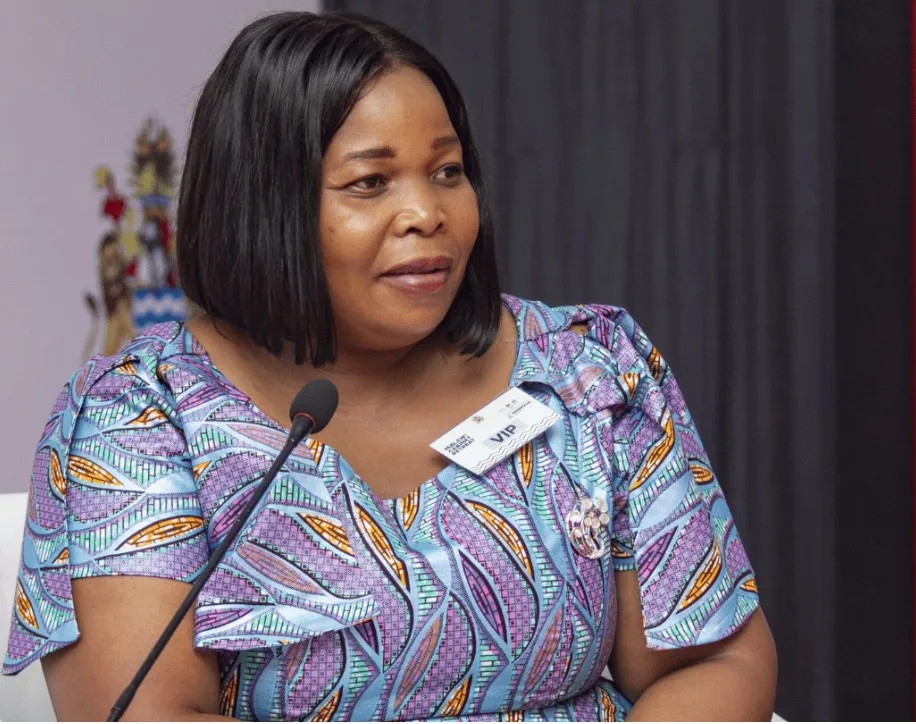
Malawi’s Minister of Gender, Mary Thom Navicha, described the country’s digital transition as a deliberate strategy to tackle longstanding challenges such as delayed trials, limited access to courts, and barriers faced by survivors of gender-based violence.
She emphasised that while technology is a powerful tool, its success depends on strong institutional capacity and sustained commitment across the justice sector.
Launched in 2021 with support from the European Union and UNDP—and later expanded with backing from Iceland and Norway—the SGBV Digital Observatory Hub now operates in 11 districts and has recorded over 17,000 cases. The platform enables real-time data collection from communities, police, and courts, improving case tracking, referrals, and policy decisions.
Similarly, the e-Courts system, introduced during the COVID-19 pandemic, has reduced travel costs, enabled remote testimonies, and significantly improved efficiency in case resolution. Judicial officials report that in some districts, as many as 88 percent of digitally handled cases have been successfully concluded.
Experts from Kenya and the UNDP AI for Development Hub also stressed the importance of ethical technology deployment, data protection, and survivor-centred design—areas where Malawi’s model is gaining recognition.
Closing the session, Navicha reaffirmed the government’s commitment to deepening collaboration across institutions, while UNDP pledged continued support to scale and institutionalise Malawi’s digital justice systems in line with global human rights and gender equality goals.
The presentation positions Malawi as an emerging model for leveraging technology to deliver faster, more inclusive justice in developing economies.