





Anthropic has announced Cowork, a new feature that significantly expands the role of its AI model, Claude, moving it beyond conversation into autonomous task execution.
Released as a research preview for Claude Max users on macOS, Cowork enables Claude to actively operate within a user’s digital workspace, handling files, organising content, and completing multi-step workflows with minimal human input.
Reimagining Claude as a Digital Teammate
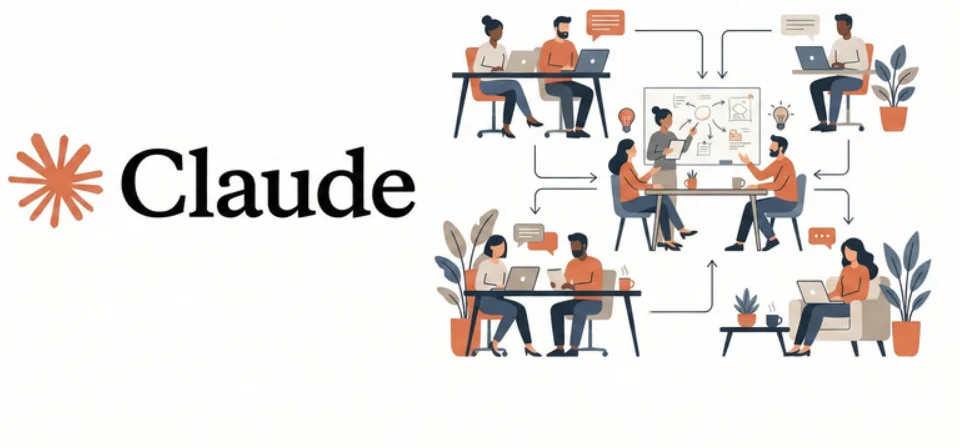
Cowork reframes Claude from a reactive assistant into a collaborative digital coworker.
Instead of responding only to prompts, users can now assign Claude access to a specific folder on their Mac. Within that controlled environment, the AI can independently:
- Read and interpret files
- Edit and generate documents
- Reorganise folders and assets
- Combine information across multiple sources
All actions are triggered through plain-language instructions, allowing users to delegate work in a way that feels closer to managing a human colleague.
Autonomous Workflows Replace Manual Prompting
What sets Cowork apart is its agentic execution model. Rather than requiring users to guide every step, Claude can now plan, execute, and monitor tasks on its own.
Early users report that Claude can:
- Break down complex tasks automatically
- Run multiple steps in parallel
- Deliver updates while work is in progress
Common use cases include cleaning up disorganised folders, extracting structured data from screenshots, and producing polished reports from fragmented notes, all without constant supervision. This represents a clear departure from earlier AI tools that relied heavily on sequential prompting.
A Strategic Expansion for Anthropic
Cowork reflects a broader strategic shift for Anthropic. By adapting the agentic foundations of Claude Code, originally designed for developers, into a general productivity feature, the company is opening Claude to a much wider audience.
This move places Anthropic in closer competition with tools like Microsoft Copilot and Google’s AI productivity offerings, all of which aim to embed AI more deeply into daily work.
Unlike many rivals, Cowork operates directly at the desktop level, integrating with platforms such as Asana and Notion, and using a browser extension that allows Claude to interact autonomously with web content.
Why Agentic AI Is a Turning Point for Productivity
The transition from suggestion-based AI to execution-driven agents marks a major shift in how digital work gets done.
For knowledge workers, Cowork promises:
- Faster turnaround on complex projects
- Automation of repetitive administrative tasks
- More time for strategic, creative, and decision-making work
Analysts and early adopters say autonomous agents can dramatically shorten task timelines, compressing hours of work into minutes by handling planning and execution simultaneously.
Security and Privacy Risks Come Into Focus
Granting AI systems the ability to act introduces new risks. File access, document editing, and autonomous execution raise valid concerns around data protection and misuse.
Anthropic says Cowork includes safeguards such as:
- Folder-level access restrictions
- Explicit user approval for major actions
- Clear visibility into permitted operations
Still, experts caution that prompt injection attacks, where malicious content manipulates AI behaviour, remain a serious vulnerability, particularly when agents have execution authority beyond conversation.
Enterprise Use Cases and Governance Challenges
For businesses, Cowork presents both opportunity and uncertainty.
On the upside, agentic AI could streamline operations like:
- Document management
- Data synthesis and analysis
- Content production
- Internal knowledge workflows
However, enterprises dealing with sensitive or regulated data must implement strong governance frameworks, audit controls, and compliance policies to manage autonomous systems responsibly.
Industry observers continue to highlight alignment risk, where AI systems may interpret instructions in unintended ways as autonomy increases.
A Signal of Where Workplace AI Is Headed
While Cowork remains a limited research preview, its launch underscores a broader industry trend: AI is moving from conversation to collaboration.
The next generation of AI tools will not just answer questions, they will:
- Execute work
- Manage outcomes
- Adapt to real-world context
Whether this shift delivers sustained productivity gains or introduces new categories of risk will depend on how thoughtfully these systems are deployed.
For now, Cowork challenges conventional assumptions about AI’s role at work and signals that autonomous AI coworkers are no longer theoretical; they are beginning to arrive.