





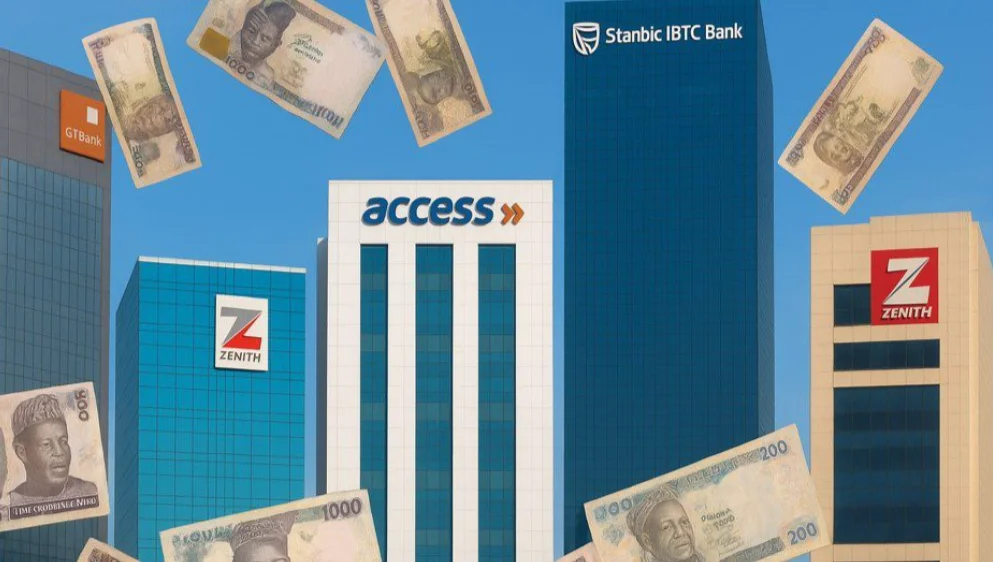
The Governor of the Central Bank of Nigeria (CBN), Olayemi Cardoso, has revealed that 16 Nigerian banks have successfully achieved the revised minimum capital base, while 27 additional lenders are currently mobilising fresh capital. Cardoso announced this during the 303rd Monetary Policy Committee (MPC) meeting, emphasizing the continued strength of Nigeria’s financial system despite broad economic reforms.
CBN Highlights Link Between Stability and Sustainable Growth
Cardoso reaffirmed that the financial sector remains robust, noting that long-term stability is essential for investment and economic expansion.
According to him, “Stability leads to investment, and investment produces growth. What Nigeria needs is long-lasting, sustainable growth, not temporary gains.” He added that sectoral performance in recent quarters reflects rising investor confidence supported by financial system stability.
Revised Capital Requirements Introduced in 2024
The new recapitalisation framework, announced in March 2024 and effective April 1, 2024, significantly raised the minimum capital thresholds for banks based on licence categories:
- N500 billion for banks with international authorisation
- N200 billion for national banks
- N50 billion for regional banks
The CBN explained that the updated requirements are designed to strengthen banks against economic shocks, support national development goals, and deepen financial inclusion.
Approved Methods for Meeting the New Capital Base
Banks have several options to comply with the recapitalisation mandate, including:
- Raising fresh equity through private placements
- Conducting rights issues
- Pursuing mergers and acquisitions
These strategies allow each institution to choose a pathway that aligns with its business model and market strength.
Banks That Have Already Met the Capital Thresholds
The following banks have reached or exceeded their required capital levels:
The following banks have reached or exceeded their required capital levels:
- Access Holdings
- Zenith Bank
- GTBank (GTCO)
- Ecobank
- Stanbic IBTC
- Wema Bank
- Providus Bank
- Globus Bank
- Premium Trust Bank
- Greenwich Merchant Bank
- Jaiz Bank
- Lotus Bank
Other institutions are expected to join the compliant group soon. For example, First HoldCo is currently raising N350 billion via private placement to reach N748 billion in total paid-up capital by H2 2025. Fidelity Bank, FCMB, and Sterling Bank are also actively mobilising capital.
The CBN has set March 2026 as the final deadline for all banks to meet the new capital requirements.
CBN Expands Sector Reforms with Stricter Compliance Measures
As part of its broader regulatory overhaul, the CBN is proposing tougher penalties for repeat issuers of dud cheques. A new exposure draft, Guidelines on the Treatment of Dud Cheques by Banks and Other Financial Institutions in Nigeria, recommends an automatic five-year ban for individuals who repeatedly issue cheques without sufficient funds.
Key obligations for financial institutions include:
- Reporting dishonoured cheques to the Credit Risk Management System (CRMS) and two licensed credit bureaus within one hour
- Notifying affected customers within two business days using verifiable communication channels
- Providing complete details of the dishonoured cheque
Conclusion
With 16 banks already compliant and many others racing toward their targets, the CBN’s recapitalisation agenda is reshaping the Nigerian banking landscape. The reforms aim to reinforce financial stability, enhance investor confidence, and position the sector to drive durable economic growth.