





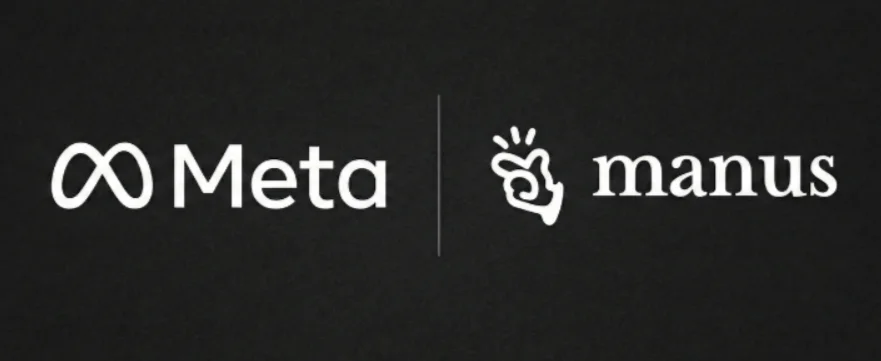
Meta has confirmed the acquisition of Manus AI in a transaction valued at more than $2 billion, marking a decisive step toward embedding action-oriented artificial intelligence across its core platforms, Facebook, Instagram, and WhatsApp.
The deal underscores a broader strategic shift at Meta: moving beyond AI that merely generates content to systems capable of planning and executing tasks autonomously within social and messaging environments.
In a statement, a Meta spokesperson said the acquisition is designed to strengthen user capabilities while addressing geopolitical and data security concerns.
“Meta’s acquisition of Manus AI will allow us to deliver advanced technology to our users with safeguards to mitigate potential risks. There will be no continuing Chinese ownership interests in Manus AI following the transaction, and the company will cease operations and services in China.”
Why Manus Is Strategically Important
Manus has rapidly gained prominence for its work in agentic AI, a category of artificial intelligence focused on independent decision-making and task execution rather than passive response generation.
Founded by Chinese entrepreneurs and initially developed in Shenzhen before relocating to Singapore, Manus released its first general-purpose AI agent earlier this year. Unlike traditional large language models that respond sequentially to prompts, Manus functions as an orchestration layer, coordinating multiple specialised agents that can:
- Navigate the web and gather information
- Analyse datasets and documents
- Write, test, and run code
- Execute complex, multi-step workflows with minimal supervision
This architecture sets Manus apart from most current AI assistants, including Meta’s own Llama models, which primarily focus on generating text, images, or code outputs.
WhatsApp: The Centrepiece of Meta’s Agentic AI Strategy
The most immediate and impactful application of Manus technology is expected to be within WhatsApp, where Meta has long aimed to build a super-app, particularly in regions where the platform already supports payments, commerce, and customer engagement.
Earlier chatbot experiments struggled with limited flexibility and poor context handling. Agentic AI changes this by enabling systems that can understand intent and take follow-up actions.
With Manus-powered agents, WhatsApp users could:
- Condense lengthy or disorganised group chats into summaries
- Generate replies that match individual tone and context
- Convert conversations into structured to-do lists or schedules
For businesses, the implications are more far-reaching. Autonomous agents could:
- Resolve customer queries end-to-end
- Schedule appointments and manage bookings
- Update simple inventory or CRM records
- Produce performance summaries directly inside chats
For small and medium-sized businesses, this represents enterprise-level automation without enterprise-level costs.
Instagram: AI as a Creative and Strategic Partner
Instagram’s creator ecosystem also stands to benefit significantly. Instead of limiting AI to image enhancement or caption suggestions, agentic systems could serve as full creative co-pilots.
Manus-enabled agents could:
- Analyse engagement patterns and audience behaviour
- Recommend optimal posting times and formats
- Generate SEO-optimised captions
- Produce multiple Reel variations from raw content
This shift would allow creators and brand teams to focus less on manual optimisation and more on creative direction and strategic decision-making.
Facebook: Turning Information Into Action
On Facebook, agentic AI could help users navigate the platform’s dense information environment. Groups, pages, and feeds contain enormous amounts of collective insight, but extracting value is often time-consuming.
Instead of endless scrolling, users could ask AI agents to:
- Summarise discussions and debates
- Compile recommendations from the group activity
- Plan events, purchases, or activities based on recent posts
This would reposition Facebook from a passive content feed into an active utility layer that translates social data into actionable outcomes.
Strengthening Meta’s Position in the AI Race
The acquisition significantly bolsters Meta’s standing in an increasingly competitive AI landscape. Rivals such as Google, Microsoft, and OpenAI are all accelerating efforts to commercialise agent-based systems capable of operating across multiple tools and platforms.
By bringing Manus in-house, Meta shortens its development timeline while gaining a team experienced in deploying real-world autonomous agents. The move also aligns with broader initiatives such as Meta Superintelligence Labs and the company’s expanding investments in AI infrastructure.
Risk, Oversight, and Data Protection
Despite the promise, agentic AI introduces heightened risks. Systems that take action, rather than simply generate content, raise complex questions around:
- Reliability and failure modes
- Accountability for automated decisions
- User control and consent
Privacy concerns are particularly acute within messaging platforms. Meta says it will fully sever Manus’s former Chinese affiliations and implement robust safeguards, including geo-restrictions, controlled access to sensitive systems, and enhanced data protection frameworks.
A Defining Moment for Social Platforms
At its core, Meta’s acquisition of Manus is a clear signal that the era of generative AI as a novelty feature is ending. The next phase of competition will be defined by how effectively platforms can act on users’ behalf.
If executed successfully, Facebook, Instagram, and WhatsApp could evolve beyond social networks into some of the most widely used personal and business assistants in the world, reshaping how billions of people interact with digital services.