




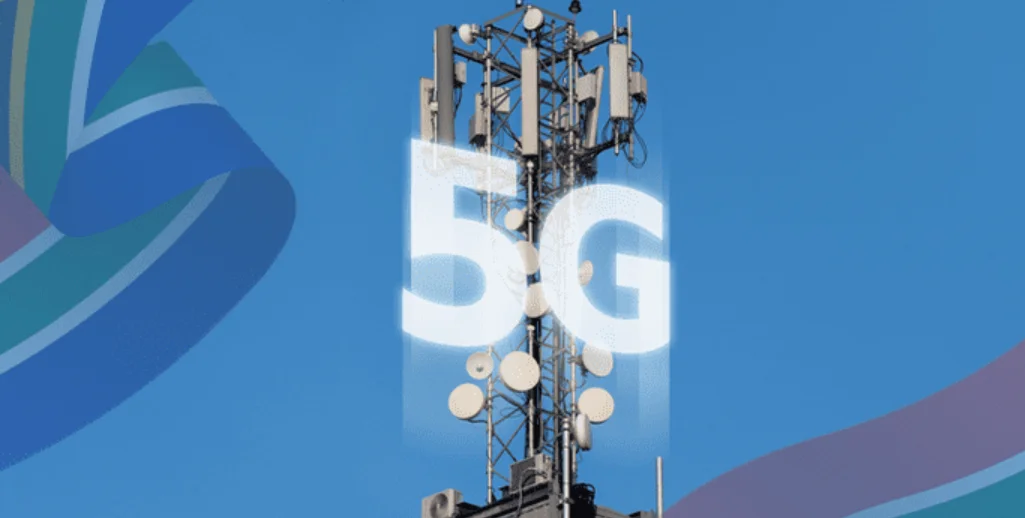
Nigeria’s deployment of 5G mobile technology continues to trail consumer readiness, with new data showing that the country recorded an average 5G coverage gap of 55% as of December 2025. The findings are based on Quality of Experience (QoE) insights published by the Nigerian Communications Commission (NCC) in collaboration with Ookla.
The data highlights a growing imbalance between the rapid uptake of 5G-capable smartphones and the limited reach of next-generation mobile networks, even within Nigeria’s most economically active urban centres.
5G Smartphones Outnumber Available Networks
While ownership of 5G-enabled devices continues to rise, access to reliable 5G connectivity remains limited in major cities.
- Lagos recorded an average 5G coverage of 27%
- Abuja achieved 31% coverage
As a result, most users with compatible devices in these locations still rely on 4G networks, falling short of the speed, capacity, and latency improvements promised by 5G technology.
Infrastructure Complexity Hampers Deployment
Although 5G is designed to deliver ultra-fast speeds, minimal latency, and support for large-scale device connectivity, its rollout in Nigeria has been constrained by significant infrastructure demands. These include the need for dense base station deployment, extensive fibre backhaul, and substantial capital investment.
Nigeria introduced 5G commercially in September 2022, when MTN launched services in Lagos and selected cities. Airtel followed in June 2023, while Mafab Communications announced launches in Abuja and Lagos in January 2023, though full operations have yet to materialise.
Despite these efforts, 5G availability remains inconsistent. With average coverage estimated at around 65% in key locations, users with 5G smartphones are unable to access the network more than half the time.
Lagos Emerges as the Most Affected City
Detailed quarterly analysis shows that Lagos has Nigeria’s largest 5G coverage deficit, with an overall gap of 55.4%.
In densely populated commercial districts, the shortfall is even more pronounced:
- MTN: approximately 50% coverage gap
- Airtel: roughly 77% gap
- Combined shortfall in business districts: about 64%
Strategic areas such as Lagos Island and Victoria Island are particularly impacted, posing risks to productivity in sectors that depend on high-speed, low-latency connectivity.
Abuja Shows Relative Progress, Still Falls Short
The Federal Capital Territory (FCT) performed marginally better, recording a 47.4% coverage gap. However, the figures indicate that nearly one in every two potential 5G connections in Abuja still fails.
Although urban centres with 30–40% coverage outperform rural communities, the data reinforces the persistent urban-rural connectivity divide across Nigeria.
Mismatch Between Strategy and User Demand
The findings point to a structural weakness in Nigeria’s 5G deployment strategy, where network expansion has not kept pace with consumer adoption. This disconnect leaves significant economic and technological value untapped.
To address this, the report advises telecom operators to prioritise network upgrades and densification in Lagos and Abuja, where closing the existing gap could instantly unlock access for millions of users already equipped with compatible devices.
Spectrum Reallocation and Rural Focus Required
With 2G and 3G technologies still serving nearly half of Nigeria’s mobile subscribers, industry analysts argue that accelerating the phase-out of legacy networks is essential. Re-farming this spectrum would improve capacity for 4G and 5G services.
In parallel, operators are encouraged to scale investment in rural and underserved regions, where limited broadband access continues to widen the national digital divide.
5G’s Role in Nigeria’s Digital Economy Vision
As Nigeria works to deepen broadband penetration and improve network performance, closing the 5G coverage gap will be critical to enabling innovation, digital services, and productivity growth.
Robust next-generation connectivity is widely viewed as a foundational pillar of Nigeria’s ambition to build a $1 trillion digital economy, positioning 5G expansion as a strategic national priority rather than a purely telecom challenge.