






Sub-Saharan Africa is quickly becoming one of the world’s fastest-growing cryptocurrency markets, with digital assets increasingly integrated into everyday financial activity. According to Chainalysis’ Geography of Cryptocurrency report, the region processed more than $205 billion in on-chain value between July 2024 and June 2025, a 52% year-on-year increase, driven by structural economic needs rather than speculative hype.
Small transactions under $10,000 make up over 8% of transfers, above the global average, showing crypto’s importance in financial inclusion and everyday finance. Bitcoin remains the primary store of value, while stablecoins like USDT are widely used for cross-border payments and trade. Nigeria leads the continent in adoption, but other countries are seeing steady growth.
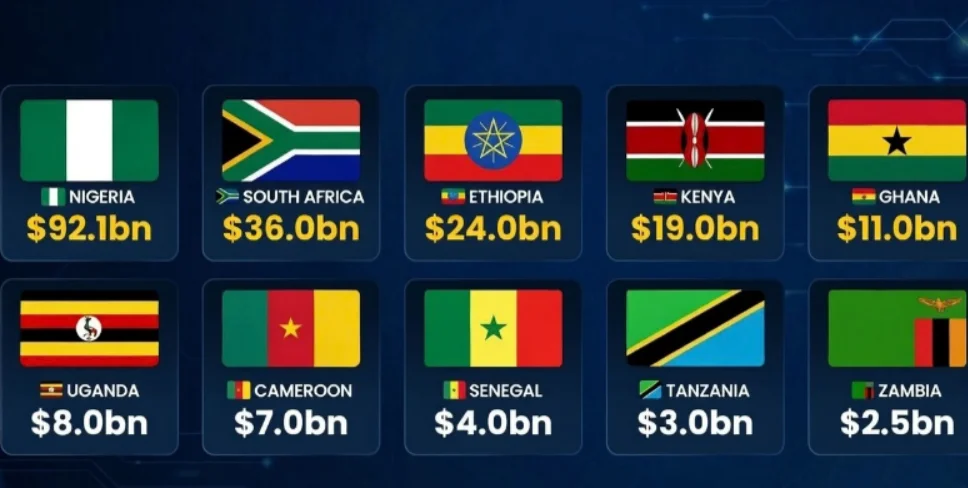
Top 10 African Countries by Crypto Transaction Volume
1. Nigeria – $92.1 Billion
Nigeria continues to dominate Africa’s crypto scene, accounting for nearly half of the continent’s total transaction volume. Ranked 6th globally on the adoption index, crypto in Nigeria functions as essential financial infrastructure. Peer-to-peer trading, stablecoins, and informal payments are common tools for navigating currency fluctuations and capital controls.
2. South Africa – $36.0 Billion
South Africa represents a more structured crypto ecosystem, with institutional participation, active exchanges, and regulatory frameworks. Transaction sizes suggest both retail and professional usage.
3. Ethiopia – $24.0 Billion
Despite strict financial regulations, Ethiopia’s $24 billion in crypto activity signals growing demand and practical use, reflecting adoption in constrained markets.
4. Kenya – $19.0 Billion
Kenya’s adoption is supported by its well-established mobile money culture, which makes crypto, especially peer-to-peer transfers and small trades, a natural extension.
5. Ghana – $11.0 Billion
Ghana’s crypto growth is steady and pragmatic, focused on inflation hedging, remittances, and cross-border payments, with stablecoins playing a central role.
6. Uganda – $8.0 Billion
Uganda’s crypto usage fills gaps left by traditional banks, with peer-to-peer international transfers being the dominant activity.
7. Cameroon – $7.0 Billion
Cameroon reflects Central Africa’s gradual but consistent crypto adoption, driven by currency pressures and regional trade needs rather than technological hype.
8. Senegal – $4.0 Billion
Senegal’s growth demonstrates West Africa’s expanding crypto presence, supported mainly by peer-to-peer usage and increasing awareness.
9. Tanzania – $3.0 Billion
Tanzania shows gradual adoption, mostly outside formal financial systems, pointing to steady ecosystem development.
10. Zambia – $2.5 Billion
Zambia rounds out the top 10, showing early-stage adoption with strong potential for growth as financial literacy and connectivity improve.
Africa’s Crypto Ecosystem Is Diversifying
The data highlights that Africa’s crypto activity is no longer limited to a few key markets. Adoption is spreading across the continent, diversifying, and becoming embedded in practical financial behaviour. From remittances to daily transactions and cross-border commerce, digital assets are increasingly shaping how value moves in Africa.