





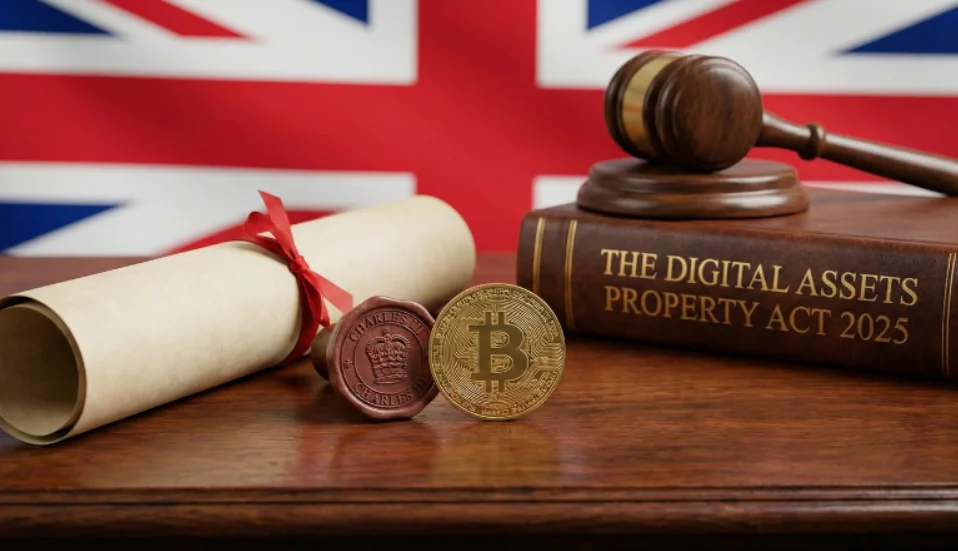
The United Kingdom has taken a major step in digital asset regulation after King Charles III granted Royal Assent to the Property Act (Digital Assets etc.) 2025. The new legislation gives cryptocurrencies and other digital-only assets full recognition as personal property, ending years of ambiguity and setting a new standard for global crypto governance.
Creating a New Class of Personal Property
The Act implements recommendations from the Law Commission of England and Wales, which argued that digital assets cannot be categorised under traditional property classes. Before now, assets like bitcoin, NFTs, and other tokens fell outside the established framework of “things in possession” or “things in action.”
The 2025 law establishes a distinct third category of personal property, ensuring digital assets are legally recognised and protected.
Enhanced Legal Protection for Crypto Holders
With digital assets now classified as personal property, crypto owners gain significant new rights. The Act allows:
- Legal protection of digital wallets and tokens
- Courts to freeze, seize, or recover crypto assets in criminal or civil cases
- Digital assets to be included in estate planning, divorces, bankruptcies, and liquidation proceedings
- Clearer remedies for victims of fraud or crypto theft
Experts describe the new framework as a turning point for digital asset law in the UK.
Strengthening the UK’s Crypto and Fintech Ambitions
The reform complements ongoing regulatory efforts on stablecoins, custody services, and digital market rules. Together, these steps support the UK’s broader strategy to become a global centre for blockchain innovation and crypto investment.
The clarified legal environment is expected to boost institutional confidence, encouraging businesses to build, scale, and manage crypto products more effectively.
A Flexible, Future-Proof Legal Framework
Crucially, the Act does not tightly define which digital instruments qualify as property. Instead, it leaves room for judicial interpretation, ensuring the law keeps pace with technological advancements. This flexibility means courts will determine how the rules apply to:
- Decentralised finance (DeFi) protocols
- Smart contract systems
- Tokenised physical assets
These areas will become clearer through future case law.
A Historic Step for Global Crypto Regulation
By formally recognising crypto as personal property, the UK establishes a consistent legal framework comparable to, and in some cases more advanced than, global counterparts still negotiating fragmented rules.
For crypto holders, digital tokens now carry the same weight as physical assets. For the international crypto industry, the UK’s move signals a serious commitment to supporting the digital economy and modernising its legal system for the Web3 era.